Category: Pecorini
Descrption:Cheese cooked with small holes to pale yellow, wrinkled crust color ochre.
Raw material:Pasteurized milk sheep, pasteurized milk, salt, rennet.
Duration:6 months
Storage:To temperature comprised between +0° and +4°C
Unit weight:From 3 kg to 12 kg
Packaging method: Vacuum packed, box of cardboard for foods
Category: Salt Ricotta
Descrption:Hard salted ricotta, cylindrical in shape, darkened from mold and harmful natural and of white color inside.
Raw material:Serum of milk, milk of sheep, salt
Duration:12 months
Storage:To temperature comprised betweeen 0° and +4°C
Unit weight:From 0,9 to 1,4 kg
Packaging method: Primary packing: Vacuum packed Secondary packing: Box of cardboard for foods
Category: Salt Ricotta
Descrption:Hard salted ricotta, cylindrical in shape, darkened from mold and harmful natural and of white color inside.
Raw material:Serum of milk, milk of sheep, salt, chili pepper
Duration:12 months
Storage:To temperature comprised betweeen 0° and +4°C
Unit weight:From 0,9 to 1,4 kg
Packaging method: Primary packing: Vacuum packed Secondary packing: Box of cardboard for foods
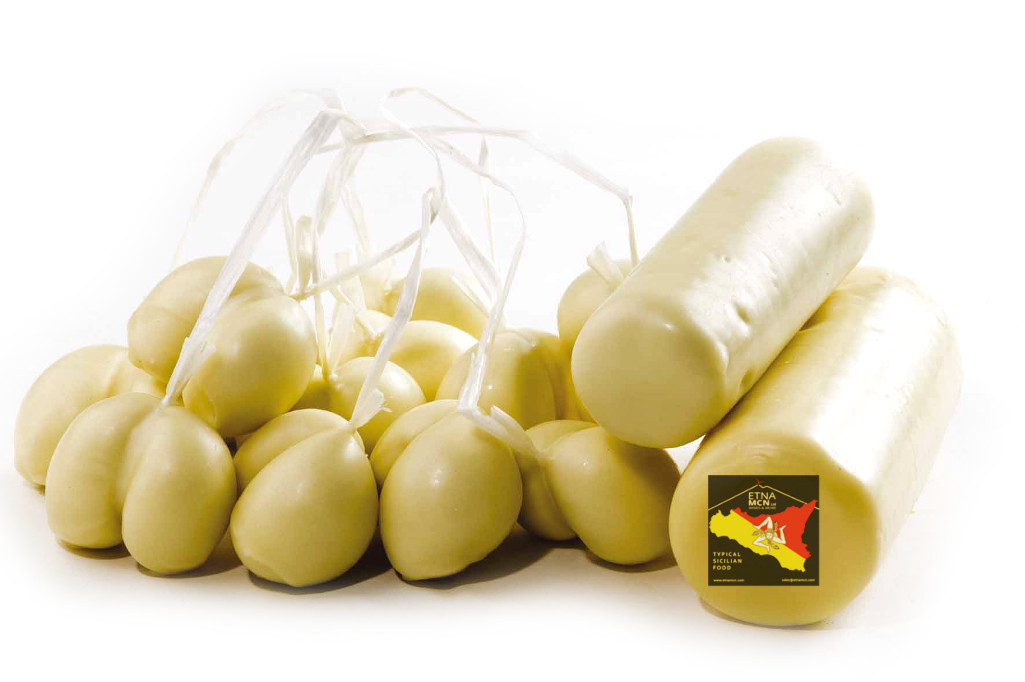
Category: Sweet Provoletta
Descrption:Typical aspect of the provola with lace. Cheese to spun paste of color ivory, with smooth crust.
Raw material:Milk pasteurized, starter colture, rennet, salt. Treaty in pickling brine
Duration:2 months
Storage:To temperature comprised betweeen 0° and +4°C
Unit weight:From 0,5 to 1 kg
Packaging method: Primary packing: Vacuum packed Secondary packing: Box of cardboard for foods
Aging: 3 days
Category: Baked Ricotta
Descrption:Baked ricotta, cylindrical in shape, crust with typical product bake and typically dark brown outside and inside.
Raw material:Serum of cow milk, milk cow, salt.
Duration:12 months
Storage:To temperature comprised betweeen 0° and +4°C
Unit weight:From 2 kg
Packaging method: Primary packing: Vacuum packed Secondary packing: Box of cardboard fro foods
Category: Waked Provoletta
Descrption:Cheese to spun paste, tender paste of color white, covered with solid paraffin.
Raw material:Milk pasteurized, starter colture, rennet, salt. Treaty in pickling brine
Duration:2 months
Storage:To temperature comprised betweeen 0° and +4°C
Unit weight:From 0,5 to 1 kg
Packaging method: Primary packing: Thermo welded container Secondary packing: Box of carboard for foods
Aging: 5 days
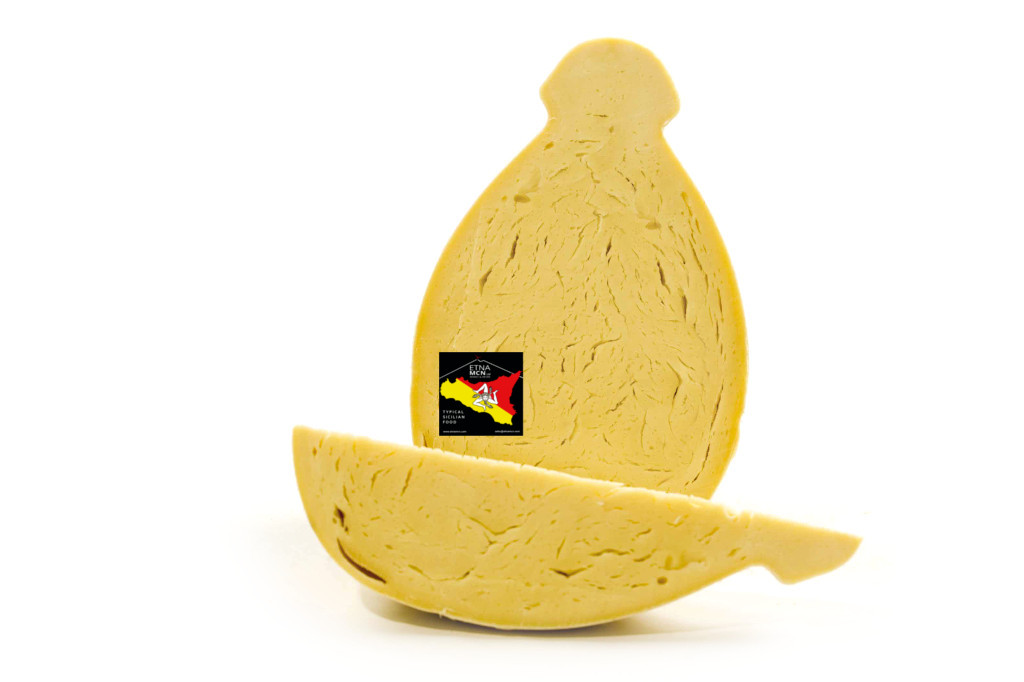
Category: Aged Provola
Descrption:Cheese to spun paste, structure to leaf through, of color ivory, with smooth and thin crust.
Raw material:Milk pasteurized, starter colture, rennet, salt. Treaty in pickling brine
Duration:12 months
Storage:Keep in a cool place
Unit weight:From 3 to 10 kg
Packaging method: Primary packing: Vacuum packed Secondary packing: Box of cardboard for foods
Aging: 4 months
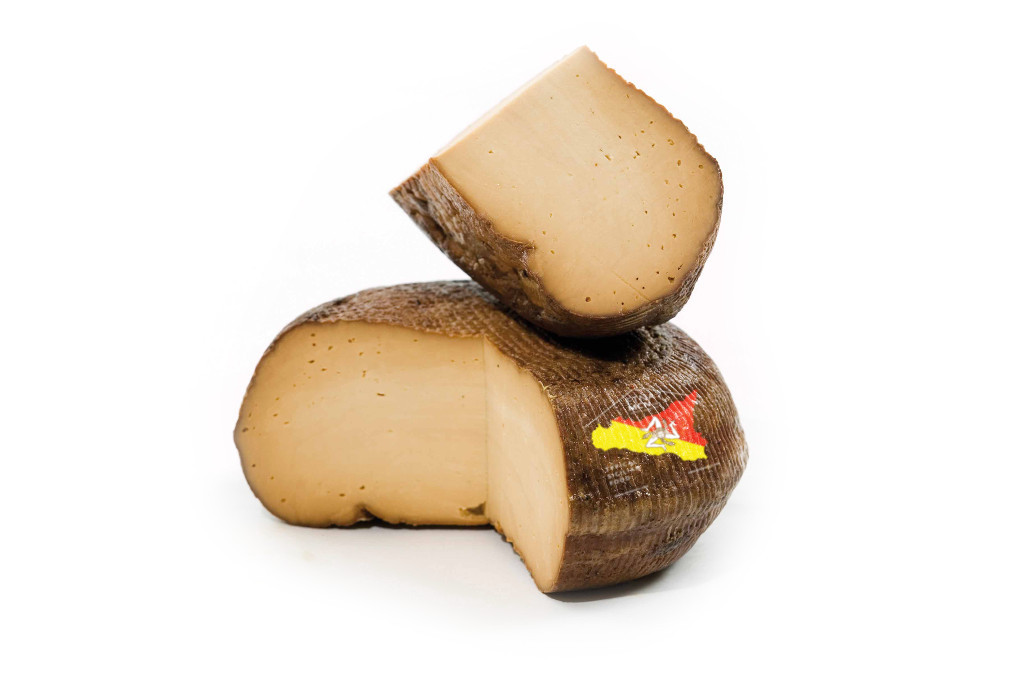
Category: Smoked Provola
Descrption:Cheese to spun paste, tender paste of color, typical of smoking, ivory color inside.
Raw material:Milk pasteurized, starter colture, rennet, salt, smoke performed in a natural way with aromatic wood shavings
Duration:2 months
Storage:To temperature comprised betweeen 0° and +4°C
Unit weight:From 0,3 to 3 kg
Packaging method: Primary packing: Vacuum packed Secondary packing: Box of cardboard for foods
Aging: 5 days
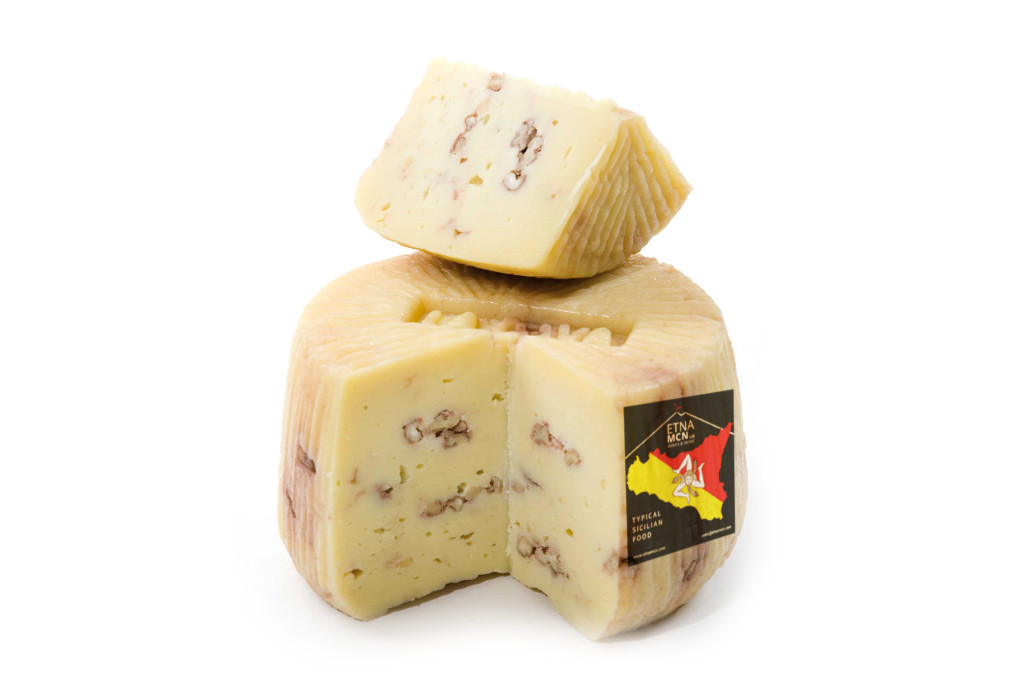
Category: Fresh Cheese with Nuts
Descrption:Cheese cooked with small holes to pale yellow, wrinkled crust color ochre.
Raw material:Pasteurized milk sheep, pasteurized milk, salt and rennet, nuts 1%.
Duration:5 months
Storage:To temperature comprised between +4° and +8°C
Unit weight:From 3 kg to 8 kg
Packaging method: Primary packing: Vacuum packed Secondary packing: Box of cardboard for foods
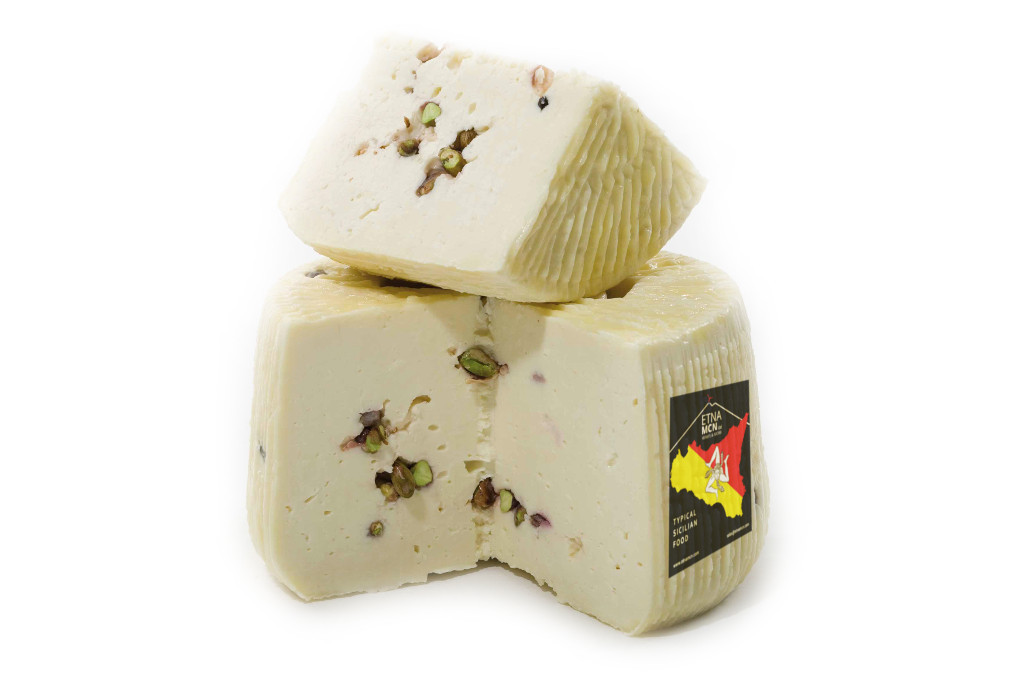
Category: Fresh Cheese with Pistachio
Descrption:Cheese cooked with small holes to pale yellow, wrinkled crust color ochre.
Raw material:Pasteurized milk sheep, pasteurized milk, salt and rennet, pistachio 1%.
Duration:5 months
Storage:To temperature comprised between +4° and +8°C
Unit weight:From 3 kg to 8 kg
Packaging method: Primary packing: Vacuum packed Secondary packing: Box of cardboard for foods
Category: Seasoned Provola with Lemon
Descrption:Chesse to spun paste, structure to leaf through, of color ivory, with smooth and thin crust.
Raw material:Milk pasteurized, starter colture, rennet, salt, lemon species Verdello, Treaty in pickling brine
Duration:12 months
Storage:Keep in a cool place
Unit weight:From 2 kg
Packaging method: Primary packing: Vacuum packed Secondary packing: Box of cardboard for foods
Aging: 4 months
Category: Provola
Descrption:Typical aspect of the provola with lace. Cheese to spun paste, tender paste of color ivory, with smooth crust.
Raw material:Milk pasteurized, starter colture, rennet, salt. Treaty in pickling brine
Duration:4 months
Storage:To temperature comprised betweeen 0° and +4°C
Unit weight:From 1 kg
Packaging method: Primary packing: Vacuum packed Secondary packing: Box of cardboard for foods
Aging: 15 days
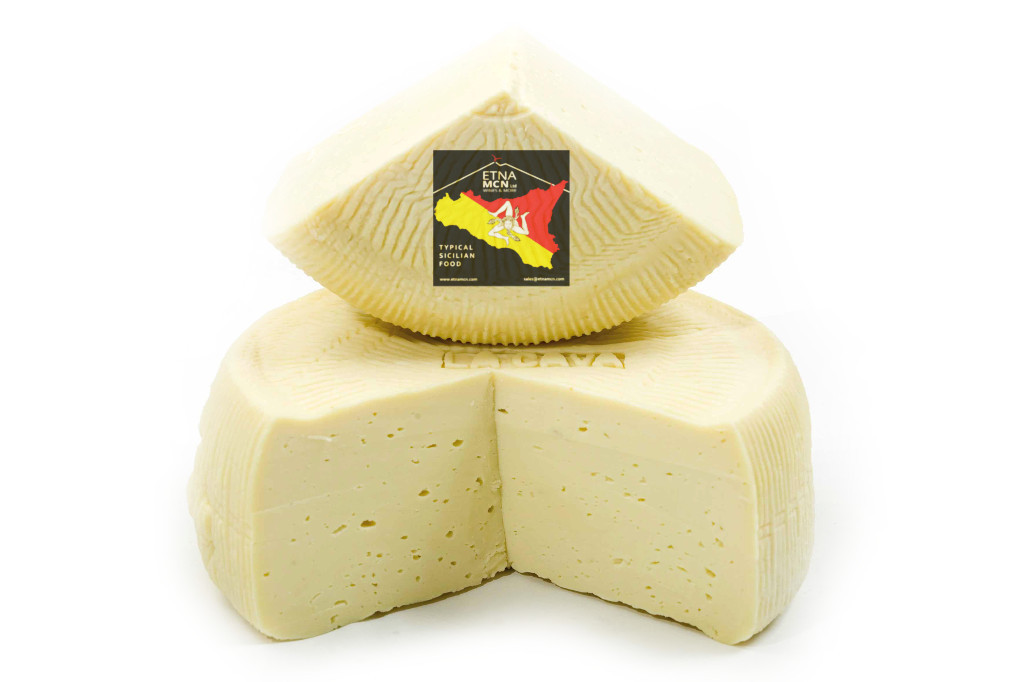
La Vastedda of the Valle del Belice D.O.P. it is a historical Sicilian cheese produced in the homonymous valley, which has recently obtained the recognition of Denomination of Protected Origin (D.O.P.). It is a unique fresh cheese: in fact it is the only sheep's milk product using ancient spinning technology.
Ingredients: whole sheep milk, lamb rennet, sea salt of Trapani saltern Production technology: whole sheep milk is coagulated in a wooden vat at 38-39 ° C with lamb's rennent paste for about 45-50 minutes. The curd is broken with traditional wooden equipment called "rotula" up to size of a grain of rice after that hot water (70°C) is added to facilitate the purging of the whey.
The cheese obtained is left to rest on the table for about 24-48 hours.
Once the curd has matured, which has naturally soured, it comes
cut into thin slices and dipped in whey or hot water and spun; the pasta is worked
first with a wooden scoop and then by hand, and finally put into shape in the typical dishes
ceramic bottoms and left to rest for about 12-24 hours. Then it goes to salting
in brine saturated with sea salt from the Saline di Trapani. Product features: It has a particular ovoid shape conferred by pressing in a deep dish one portion of spun dough Size: about 500g to 700g Crust: thin peel due to drying air Structure: compact and soft, of ivory white color Smell: milk, butter and yougurt Flavours: sapid, tart and vegatal notes
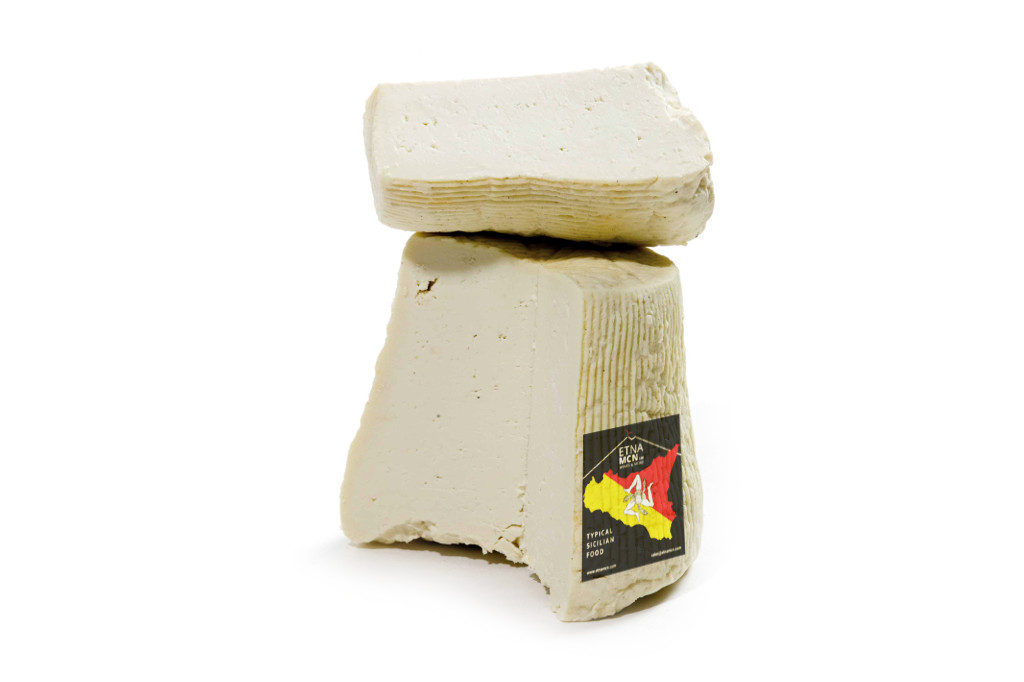
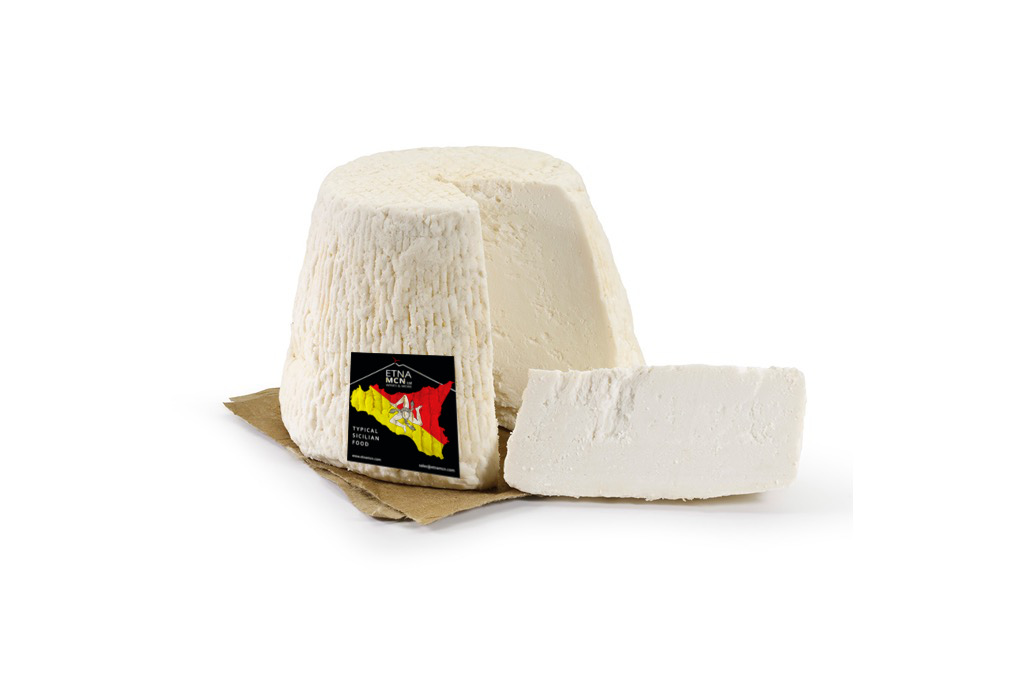
It’s a cheese made from sheep whole milk. The curd compact, and milky white. The crust is white as well, with a wrinkly surface imprinted from the basket, in which the tuma is placed and hand-pressed to remove the serum.
How to serve:
Tuma is used as filling for ravioli and flat-bread pizza. Excellent as an appetizer, in slices and fried in hot oil.
Typology: Fresh cheese from ovine and/or bovine milk. Ingredients: Ovine or bovine milk, Rennet, Salt. Milk provenance: East Sicily. Shape: Cylindrical or rectangular. Crust: Gets the basket’s marks. Colour: Clear straw-coloured. Inner colour and crust: Clear straw-coloured. Holes: Thin and small. Structure: Elastic and gummy. Smells: Lactic and moderately animal. Flavours: Mild, lightly tart. Fragrances: Lactic and vegetal. Trigeminal sensation: Absent. Structure inside mouth: Gummy, roughly strident. Taste-olfactory persistence: Low. Sales unit: Cylindrical size about 1 Kg, 3 Kg, 5 Kg, 10 Kg, 15 Kg, 20 Kg; rectangular size 3 Kg. Technological aspect: Raw ovine or bovine milk, that originates in two milkings at most, is congealed with lamb’s rennet. The curd is discharged of whey in baskets and rummaged with traditional techniques that require only manual operations. Quality control: H.A.C.C.P. System implemented in the whole productive process; product distribution with hazards control and sixmonth system control through internal and external second audit to main suppliers. Track: Track system applied for every production lot with acquisition of information and origin lots for raw materials, packaging products and execution’s charge in every degree of production cycle. Traceability: Capability for recall all deployment units at sale within 6 hours from non conformity manifestation. Non conform product’s withdrawal in 72 hours from sales freeze. Ripening: 1 day. Shelf life: 20 days. Preservation: Keep in fridge at positive temperature + 4° C. Packaging: Vacuum-packed and heated foods bag. Bach coding: 6 digits corresponding to start production’s day, month and year.
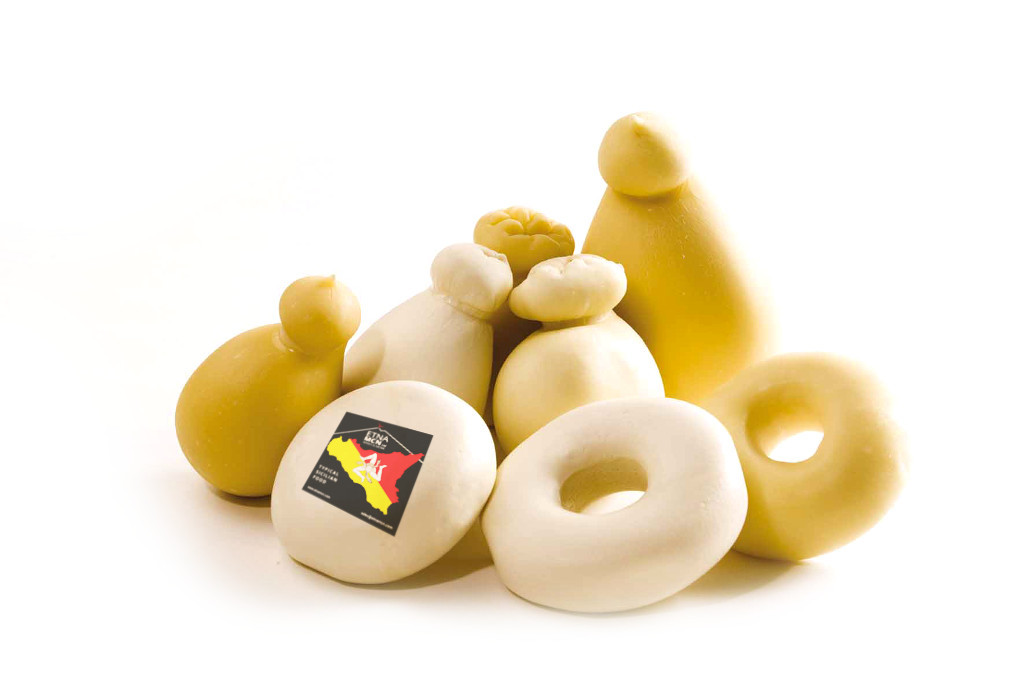
Scamorza is a cheese made from cow’s milk, with a stringy texture, hand-spun and salted.
HOW TO SERVE
Scamorza is a table cheese that can be paired with rustic appetizers. It can also be used as topping for pizza or focaccia.
Typology: Fresh stretched cheese. Ingredients: milk, Rennet, Salt. Milk provenance: East Sicily. Shape: Pear shape with calf’s head. Crust: Smooth and shiny crust. Colour: Uniform light brown. Inner colour and crust: Clear straw-coloured. Holes: Absent. Structure: Soft, moderately elastic. Smells: Melted butter lactic scents and vegetal notes. Flavours: Balance of mild, tart and sapid. Fragrances: Lactic and animal notes. Trigeminal sensation: Absent. Structure inside mouth: Elastic, moderately soluble. Taste-olfactory persistence: Medium. Sales unit: Cylindrical size about 1 Kg, 3 Kg, 5 Kg, 10 Kg, 15 Kg, 20 Kg; rectangular size 3 Kg. Technological aspect: Raw ovine or bovine milk, that originates in two milkings at most, is congealed with lamb’s rennet. The curd is discharged of whey in baskets and rummaged with traditional techniques that require only manual operations. Quality control: H.A.C.C.P. System implemented in the whole productive process; product distribution with hazards control and sixmonth system control through internal and external second audit to main suppliers. Track: Track system applied for every production lot with acquisition of information and origin lots for raw materials, packaging products and execution’s charge in every degree of production cycle. Traceability: Capability for recall all deployment units at sale within 6 hours from non conformity manifestation. Non conform product’s withdrawal in 72 hours from sales freeze. Ripening: 1 day. Shelf life: 20 days. Preservation: Keep in fridge at positive temperature + 4° C. Packaging: Vacuum-packed and heated foods bag. Bach coding: 6 digits corresponding to start production’s day, month and year.
Smoked Scamorza is a cheese made from cow’s milk, with a stringy texture, hand-spun and submerged in liquid smoke.
How to serve:Smoked Scamorza is a table cheese that can be paired with rustic appetizers. Typology: Smoked stretched cheese. Ingredients: milk, Rennet, Salt, liquid fume Milk provenance: East Sicily. Shape: Pear shape with calf’s head. Crust: Smooth and shiny crust. Colour: Clear straw-coloured. Inner colour and crust: Clear straw-coloured. Holes: Absent. Structure: Soft, moderately elastic. Smells: Smoked scents, lactic and vegetal notes. Flavours: Balance of mild, tart and moderately sapid. Fragrances: Lactic and animal notes. Trigeminal sensation: Moderately mordant. Structure inside mouth: Elastic, moderately soluble. Taste-olfactory persistence: Medium. Sales unit: About 0,5 Kg. Technological aspect: After milk’s coagulation, the curd is grossly broken, then it ripens. When it becomes ripe, it is cut in strips and kneaded with wood sticks at high temperature until it attains the convenient consistency. Some loaves of curd are created. The cheese ripens in natural environments. Pickled salting. After a week, the cheese is immersed in liquid fume for about 3 hours. Quality control: H.A.C.C.P. System implemented in the whole productive process; product distribution with hazards control and sixmonth system control through internal and external second audit to main suppliers. Track: Track system applied for every production lot with acquisition of information and origin lots for raw materials, packaging products every degree of production cycle. Traceability: Capability for recall all deployment units at sale within 6 hours from non conformity manifestation. Non conform product’s withdrawal in 72 hours from sales freeze. Ripening: 1 day. Shelf life: 60 days. Preservation: Keep in fridge at positive temperature + 4° C. Packaging: Vacuum-packed and heated foods bag. Bach coding: 6 digits corresponding to start production’s day, month and year.
The processing technique of salted ricotta consists of a particular process based on the salting of the product and its maturation. Ricotta is placed in special and airy rooms, constantly monitored. After maturing, the product acquires a solid and compact consistency. How to serve: the ideal would be to grate it on pasta, with meat or vegetable sauces, as it combines a determined natural tendency to creaminess with their determined flavor. Typology: Fresh stretched cheese. Ingredients: Ovine or bovine whey, ovine or bovine milk, Salt. Milk provenance: East Sicily. Shape: Trunk conical. Crust: Smooth and shiny crust. Colour: Milk-white. Inner colour and crust: Clear straw-coloured. Holes: Absent. Structure: Soft, moderately elastic. Smells: lactic and animal notes. Flavours: Predominant salty. Fragrances: Lactic and animal notes. Trigeminal sensation: Structure inside mouth: Moderately soluble. Taste-olfactory persistence: High. Sales unit: About 1 Kg Technological aspect: A special process based on dry salting of fresh ricotta and its maturing. Ricotta is placed in special and airy rooms, constantly monitored. After maturing, the product acquires a compact consistency excellent for grating. Quality control: H.A.C.C.P. System implemented in the whole productive process; product distribution with hazards control and sixmonth system control through internal and external second audit to main suppliers. Track: Track system applied for every production lot with acquisition of information and origin lots for raw materials, packaging products and execution’s charge in every degree of production cycle. Traceability: Capability for recall all deployment units at sale within 6 hours from non conformity manifestation. Ripening: 30 day. Shelf life: 150 days. Preservation: Keep in fridge at positive temperature + 4° C. Packaging: Vacuum-packed and heated foods bag. Bach coding: 6 digits corresponding to start production’s day, month and year.
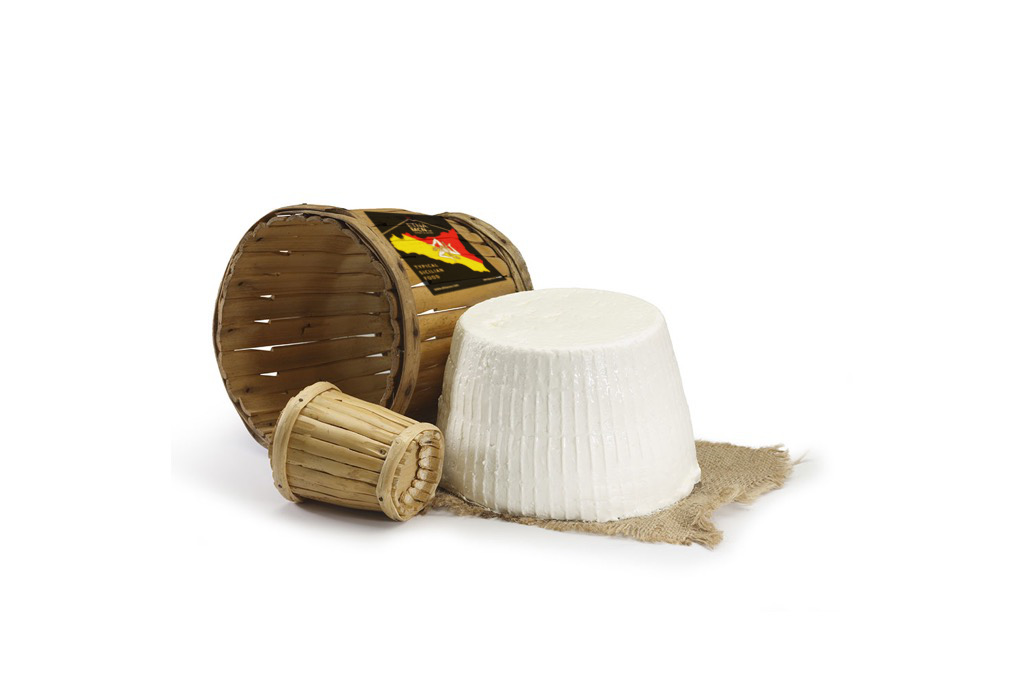
It belongs to the milk derivative products. The milk serum that results from the cheese production, with the addition of a percentage of whole milk, is brought to 80°C for 45 minutes, at which point the ricotta emerges to the surface. The texture is soft and creamy, milky white in color, a sweet flavor with no acidity, and with the typical dairy product aroma.
HOW TO SERVE
Fresh ricotta is used for many dishes, both sweet and savory. It is used in the typical Sicilian pastries such as, cannoli and cassate. Typology: Fresh dairy product from ovine and/or bovine milk. Ingredients: Ovine or bovine whey, ovine or bovine milk, Salt. Milk provenance: East Sicily. Shape: Trunk conical. Crust: Absent. Colour: Milk-white. Inner colour and crust: Milk-white. Holes: Absent. Structure: Soft, capable of being deformed. Smells: Lactic and cooked lactic. Flavours: Balance of mild, tart and moderately sapid. Fragrances: Lactic with light animal notes Trigeminal sensation: Absent. Structure inside mouth: Melting and soluble. Taste-olfactory persistence: Low. Sales unit: 0,5 Kg, 1 Kg, 2 Kg, 3 Kg. Technological aspect: The whey obtained after the cheese production, with addition of some whole milk, is led to a 80° temperature for about 45 minutes. The “ricotta” appeared on the surface is separated from the whey. Quality control: H.A.C.C.P. System implemented in the whole productive process; product distribution with hazards control and sixmonth system control through internal and external second audit to main suppliers. Track: Track system applied for every production lot with acquisition of information and origin lots for raw materials, packaging products and execution’s charge in every degree of production cycle. Traceability: Capability for recall all deployment units at sale within 6 hours from non conformity manifestation. Non conform product’s withdrawal in 72 hours from sales freeze. Ripening: Absent. Shelf life: 7 days. Preservation: Keep in fridge at positive temperature + 4° C. Packaging: Fuscella” with “raccoglisiero” and heated film. Bach coding: 6 digits corresponding to start production’s day, month and year.
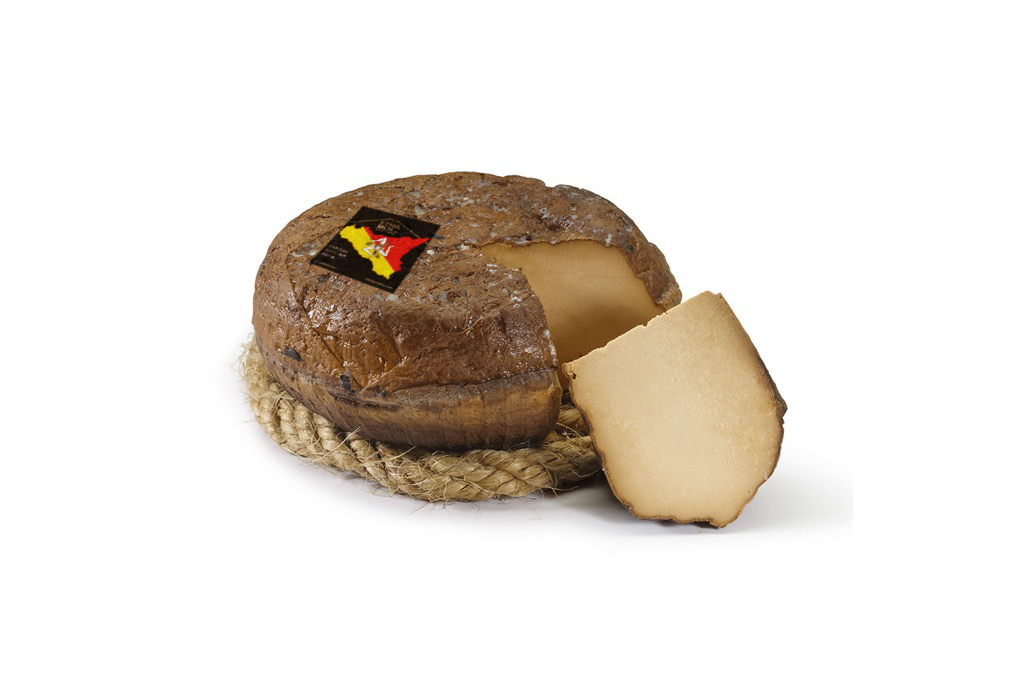
Ricotta cheese can be produced from cow’s milk and sheep milk; however, the latter is used for a more refined product. The ricotta is placed in terracotta bowls and then baked at high temperatures for a few hours; the baking process gives the cheese soft and light texture.
HOW TO SERVE
Baked ricotta is served as an appetizer, paired with rustic dishes with olives and salami. Typology: Soft dairy product put through baking. Ingredients: Ovine or bovine whey, ovine or bovine milk, Salt. Milk provenance: East Sicily. Shape: Cylindrical irregular. Crust: Not uniform with some more coloured areas. Colour: Light brown with golden stains. Inner colour and crust: Milk-white with golden inner crust. Holes: Absent. Structure: Soft, moderately capable of being deformed. Smells: Lactic and cooked lactic. Flavours: Balance of mild, tart and moderately sapid. Fragrances: Lactic and cooked lactic. Trigeminal sensation: Absent. Structure inside mouth: Firstly lumpy then melting and soluble. Taste-olfactory persistence: Medium. Sales unit: About 1 Kg. Technological aspect: Fresh “ricotta” is put in appropriate terracotta bowls and baked at high temperatures for some hours; this baking gives it unique sensory features and a light and soft consistency. Quality control: H.A.C.C.P. System implemented in the whole productive process; product distribution with hazards control and sixmonth system control through internal and external second audit to main suppliers. Track: Track system applied for every production lot with acquisition of information and origin lots for raw materials, The processing is the same used for table baked “ricotta”, but its baking is much longer and at mid
temperature. This baking gives it a more compact consistency and a deeper colour.packaging products and execution’s charge in every degree of production cycle. Traceability: Capability for recall all deployment units at sale within 6 hours from non conformity manifestation. Non conform product’s withdrawal in 72 hours from sales freeze. Ripening: 2 days. Shelf life: 30 days. Preservation: Keep in fridge at positive temperature + 4° C. Packaging: Vacuum-packed and heated foods bag. Bach coding: 6 digits corresponding to start production’s day, month and year.
The production process is the same as the one for baked ricotta, but it is baked for a longer time at lower temperatures. This baking procedure gives the cheese a more compact texture and a darker color.
HOW TO SERVE
Baked ricotta pairs well with rustic appetizers. It is ideally grated on pasta dishes with meat sauces, or on the traditional Romana pizza Typology: Dense dairy product put through baking. Ingredients: Ovine or bovine whey, ovine or bovine milk, Salt. Milk provenance: East Sicily. Shape: Round, flattened and irregular. Crust: Uniform with full pigmentation. Colour: Deep hazel brown. Inner colour and crust: Light brown with dark inner crust. Holes: Absent. Structure: Soft, moderately dense. Smells: Cooked lactic with caramel notes. Flavours: Balance of mild, tart and moderately sapid. Fragrances: Cooked and toasted lactic. Trigeminal sensation: Absent. Structure inside mouth: Firstly dense then melting and soluble. Taste-olfactory persistence: High. Sales unit: About 1 Kg. Technological aspect: The processing is the same used for table baked “ricotta”, but its baking is much longer and at mid temperature. This baking gives it a more compact consistency and a deeper colour. Quality control: H.A.C.C.P. System implemented in the whole productive process; product distribution with hazards control and sixmonth system control through internal and external second audit to main suppliers. Track: Track system applied for every production lot with acquisition of information and origin lots for raw materials, packaging products and execution’s charge in every degree of production cycle. Traceability: Capability for recall all deployment units at sale within 6 hours from non conformity manifestation. Non conform product’s withdrawal in 72 hours from sales freeze. Ripening: 2 days. Shelf life: 150 days. Preservation: Keep in fridge at positive temperature + 4° C. Packaging: Vacuum-packed and heated foods bag. Bach coding: 6 digits corresponding to start production’s day, month and year.
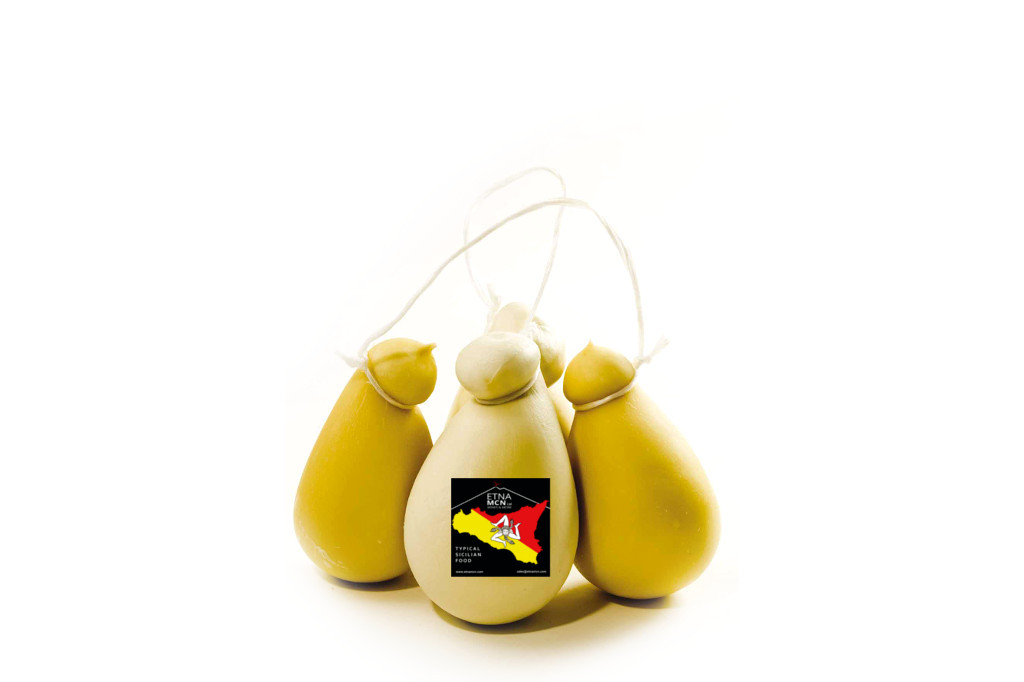
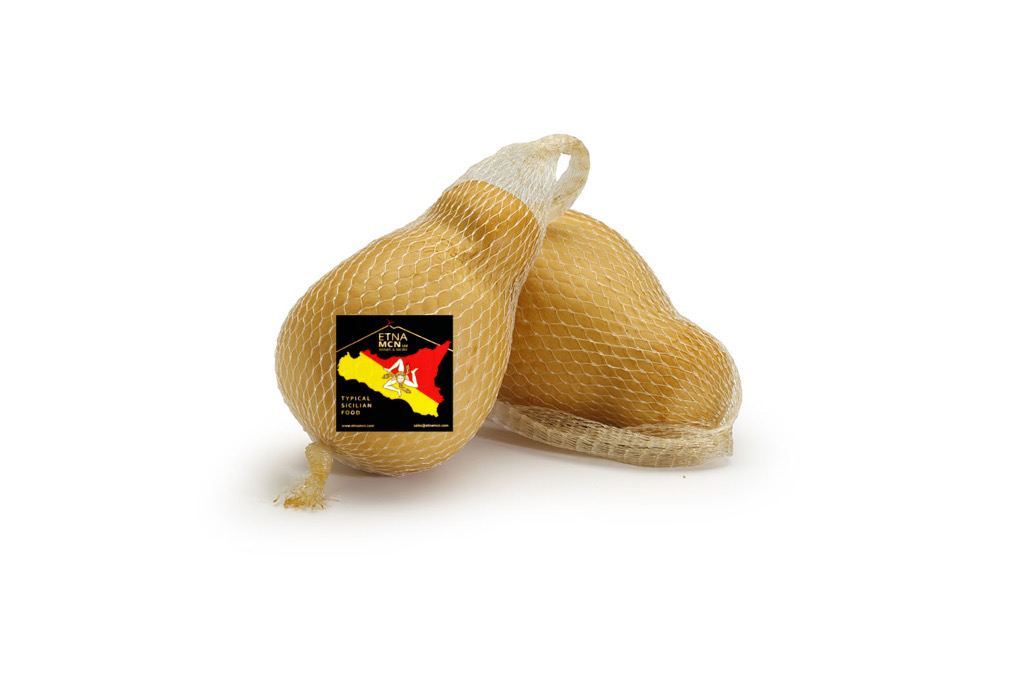
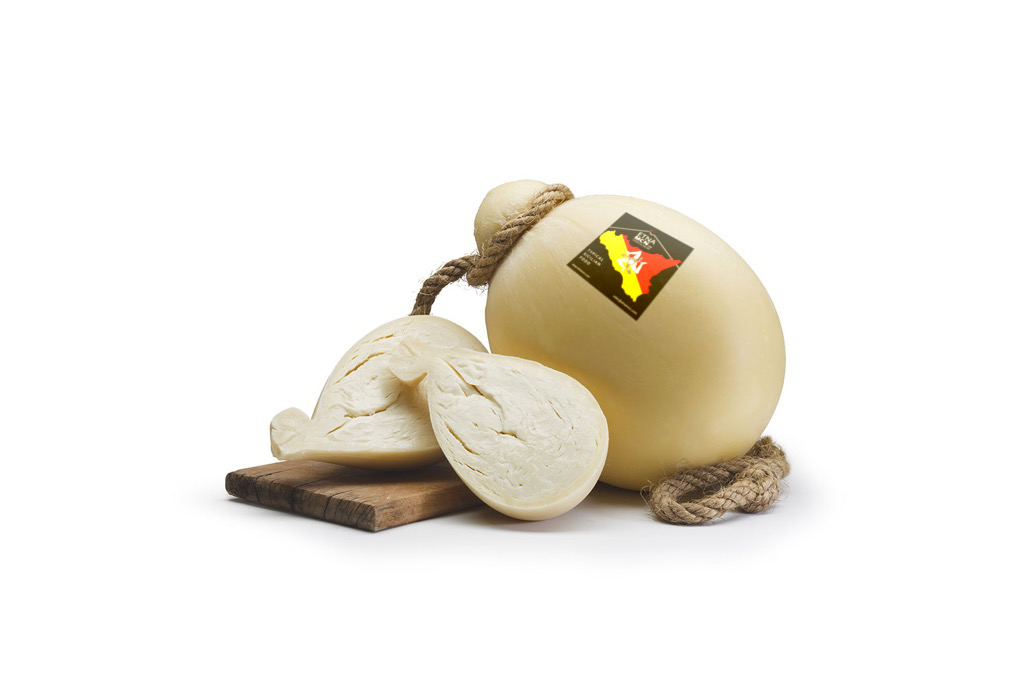
Provolone is a cheese made from cow’s milk, with stringy texture and straw-colored. It acquires its round shape while hand working the curd. It is tied-off at the neck, raffia string or twine, and can have different sizes.
HOW TO SERVE
Provolone is a table cheese that can be paired with rustic appetizers. It can also be used as filling for stuffed tomatoes and eggplant rolls. Typology: Stretched cheese flavoured with red wine. Ingredients: Milk, Rennet, Salt, Red Wine. Milk provenance: East Sicily. Shape: Pear shape with calf’s head. Crust: Smooth and shiny crust. Colour: Distinctive colour of wine’s pigments. Inner colour and crust: Clear straw-coloured. Holes: Absent. Structure: Dense, moderately elastic. Smells: Melted butter lactic scents and notes of fermented. Flavours: Balance of mild, tart and sapid. Fragrances: Lactic, animal and wine notes. Trigeminal sensation: Moderately warming. Structure inside mouth: Firstly lumpy then melting and soluble. Taste-olfactory persistence: High. Sales unit: About 1 Kg, 2 Kg. Technological aspect: raw milk, that originates in two milkings at most, is congealed with lamb’s rennet. The curd ripens in at least 24 hours, then stretched and shaped with traditional techniques that require only manual operations. The cheese ripens in natural environments. After a week, the cheese is immersed in red Etna wine for 15 days. Quality control: H.A.C.C.P. System implemented in the whole productive process; product distribution with hazards control and sixmonth system control through internal and external second audit to main suppliers. Track: Track system applied for every production lot with acquisition of information and origin lots for raw materials, packaging products and execution’s charge in every degree of production cycle. Traceability: Capability for recall all deployment units at sale within 6 hours from non conformity manifestation. Non conform product’s withdrawal in 72 hours from sales freeze. Ripening: 4 days. Shelf life: 90 days. Preservation: Keep in fridge at positive temperature + 4° C. Packaging: Packaging 2012 Bach coding: 6 digits corresponding to start production’s day, month and year.
The production technique of aged provolone consists in an aging process in well ventilated and cool rooms, in which the cheese is hung over a pole for the entire aging period, which varies from 3 to 4 years.
HOW TO SERVE
Aged provolone is an excellent table cheese, with a spicy and pungent flavor. It can be served lightly grilled. Typology: Stretched cheese after long maturing. Ingredients: Milk, Rennet, Salt. Milk provenance: East Sicily. Shape: Pear shape with calf’s head. Crust: Smooth and shiny crust. Colour: Deep straw-coloured. Inner colour and crust: Straw-coloured with golden inner crust. Holes: Absent. Structure: Dense. Smells: Animal and vegetal notes. Flavours: Typical decisive taste, sapid and mild. Fragrances: Animal and dried fruit notes. Trigeminal sensation: Spicy. Structure inside mouth: Firstly lumpy then melting and soluble. Taste-olfactory persistence: High. Sales unit: About 1 Kg, 3 Kg, 5 Kg, 10 Kg. Technological aspect: Raw bovine milk, that originates in two milkings at most, is congealed with lamb’s rennet. The curd ripens in at least 24 hours, then stretched and shaped with traditional techniques that require only manual operations. Pickled salting. The cheese ripens in natural environments. Ripening consists in a drying process in cool and windy spots, where the cheese is hanged on a perch for the whole period of ripening, that varies from 3 to 4 months. Quality control: H.A.C.C.P. System implemented in the whole productive process; product distribution with hazards control and sixmonth system control through internal and external second audit to main suppliers. Track: Track system applied for every production lot with acquisition of information and origin lots for raw materials, packaging products and execution’s charge in every degree of production cycle. Traceability: Capability for recall all deployment units at sale within 6 hours from non conformity manifestation. Non conform product’s withdrawal in 72 hours from sales freeze. Ripening:120 days. Shelf life: 180 days. Preservation: Keep in fridge at positive temperature + 4° C. Packaging: Packaging 2012 Bach coding: 6 digits corresponding to start production’s day, month and year.
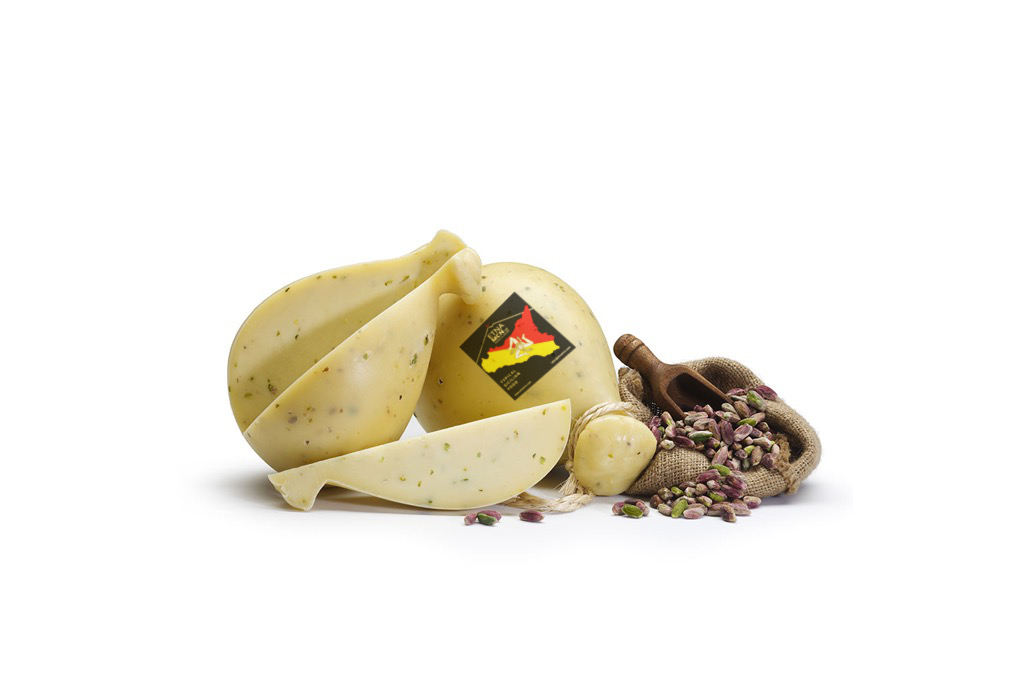
Provolone is a cheese made from cow’s milk, with stringy texture and straw-colored. It acquires its round shape while hand working the curd. It is tied-off at the neck, raffia string or twine, and can have different sizes.
How to serve
Provolone is a table cheese that can be paired with rustic appetizers. It can also be used as filling for stuffed tomatoes and eggplant rolls. Typology: Stretched cheese with pistachio. Ingredients: Milk, Rennet, Salt, pistachio (2-3 %). Milk provenance: East Sicily. Shape: Pear shape with calf’s head. Crust: Smooth and shiny crust. Colour: Not uniform straw-coloured with little green-yellow stains. Inner colour and crust: Not uniform straw-coloured with little green-yellow stains. Holes: Absent. Structure: Dense, moderately elastic. Smells: Melted butter lactic scents and vegetal notes of dried fruit. Flavours: Balance of mild, tart and moderately sapid. Fragrances: Lactic and animal notes. Trigeminal sensation: Moderately spicy. Structure inside mouth: Firstly lumpy then melting and soluble. Taste-olfactory persistence: Medium. Sales unit: About 1 Kg, 2 Kg. Technological aspect: Raw milk, that originates in two milkings at most, is congealed with lamb’s rennet. The curd ripens in at least 24 hours, then stretched with insertion of pistachio and shaped with traditional techniques that require only manual operations. The cheese ripens in natural environments. Quality control: H.A.C.C.P. System implemented in the whole productive process; product distribution with hazards control and sixmonth system control through internal and external second audit to main suppliers. Track: Track system applied for every production lot with acquisition of information and origin lots for raw materials, packaging products and execution’s charge in every degree of production cycle. Traceability: Capability for recall all deployment units at sale within 6 hours from non conformity manifestation. Non conform product’s withdrawal in 72 hours from sales freeze. Ripening: 4 days. Shelf life: 60 days. Preservation: Keep in fridge at positive temperature + 4° C. Packaging: Packaging 2012 Bach coding: 6 digits corresponding to start production’s day, month and year.
Provolone is a cheese made from cow’s milk, with stringy texture and straw-colored. It acquires its round shape while hand working the curd. It is tied-off at the neck, raffia string or twine, and can have different sizes.
HOW TO SERVE
Provolone is a table cheese that can be paired with rustic appetizers. It can also be used as filling for stuffed tomatoes and eggplant rolls.
Typology: Stretched cheese with chili pepper. Ingredients: Milk, Rennet, Salt, chili pepper (2-3 %). Milk provenance: East Sicily. Shape: Pear shape with calf’s head. Crust: Smooth and shiny crust. Colour: Not uniform straw-coloured and punctiform brick coloured. Inner colour and crust: Not uniform straw-coloured and punctiform brick coloured. Holes: Absent. Structure: Dense, moderately elastic. Smells: Melted butter lactic scents, vegetal and spicy notes. Flavours: Good notes of mild, tart and sapid. Fragrances: Lactic and animal notes. Trigeminal sensation: Moderately spicy. Structure inside mouth: Firstly lumpy then melting and soluble. Taste-olfactory persistence: High. Sales unit: About 1 Kg, 2 Kg. Technological aspect: Raw milk, that originates in two milkings at most, is congealed with lamb’s rennet. The curd ripens in at least 24 hours, then stretched and shaped with traditional techniques that require only manual operations. The cheese ripens in natural environments. Quality control: H.A.C.C.P. System implemented in the whole productive process; product distribution with hazards control and sixmonth system control through internal and external second audit to main suppliers. Track: Track system applied for every production lot with acquisition of information and origin lots for raw materials, packaging products and execution’s charge in every degree of production cycle. Traceability: Capability for recall all deployment units at sale within 6 hours from non conformity manifestation. Non conform product’s withdrawal in 72 hours from sales freeze. Ripening: 4 days. Shelf life: 60 days. Preservation: Keep in fridge at positive temperature + 4° C. Packaging: Packaging 2012 Bach coding: 6 digits corresponding to start production’s day, month and year.
Provolone is a cheese made from cow’s milk, with stringy texture and straw-colored. It acquires its round shape while hand working the curd. It is tied-off at the neck, raffia string or twine, and can have different sizes.
HOW TO SERVE
Provolone is a table cheese that can be paired with rustic appetizers. It can also be used as filling for stuffed tomatoes and eggplant rolls.
Typology: Stretched cheese flavoured with “verdello” lemon. Ingredients: “Verdello” lemon (8-10 %), Rennet, Salt. Milk provenance: East Sicily. Shape: Pear shape with calf’s head. Crust: Smooth and shiny crust. Colour: Straw-coloured. Inner colour and crust: Clear straw-coloured with a lemon in the interior. Holes: Absent. Structure: Dense, moderately elastic. Smells: Melted butter lactic scents, vegetal and fruit notes. Flavours: Good notes of mild, tart and sapid. Fragrances: Lactic and animal notes. Trigeminal sensation: Moderately refreshing. Structure inside mouth: Firstly lumpy then melting and soluble. Taste-olfactory persistence: High. Sales unit: About 1 Kg, 2 Kg. Technological aspect: Raw bovine milk, that originates in two milkings at most, is congealed with lamb’s rennet. The curd ripens in at least 24 hours, then stretched and shaped with traditional techniques that require only manual operations. The cheese ripens in natural environments. It’s the traditional “provola” with “verdello” lemon, rigorously not treated, from Alcantara Valley. Quality control: H.A.C.C.P. System implemented in the whole productive process; product distribution with hazards control and sixmonth system control through internal and external second audit to main suppliers. Track: Track system applied for every production lot with acquisition of information and origin lots for raw materials, packaging products and execution’s charge in every degree of production cycle. Traceability: Capability for recall all deployment units at sale within 6 hours from non conformity manifestation. Non conform product’s withdrawal in 72 hours from sales freeze. Ripening: 4 days. Shelf life: 90 days. Preservation: Keep in fridge at positive temperature + 4° C. Packaging: Packaging 2012 Bach coding: 6 digits corresponding to start production’s day, month and year.
Provolone is a cheese made from cow’s milk, with stringy texture and straw-colored. It acquires its round shape while hand working the curd. It is tied-off at the neck, raffia string or twine, and can have different sizes.
HOW TO SERVE
Provolone is a table cheese that can be paired with rustic appetizers. It can also be used as filling for stuffed tomatoes and eggplant rolls. Typology: Stretched cheese. Ingredients: Milk, Rennet, Salt. Milk provenance: East Sicily. Shape: Pear shape with calf’s head. Crust: Smooth and shiny crust. Colour: Clear straw-coloured. Inner colour and crust: Clear straw-coloured. Holes: Absent. Structure: Dense, moderately elastic. Smells: Melted butter lactic scents and vegetal notes. Flavours: Balance of mild, tart and sapid. Fragrances: Lactic and animal notes. Trigeminal sensation: Absent. Structure inside mouth: Firstly lumpy then melting and soluble. Taste-olfactory persistence: Medium. Sales unit: About 0,5 Kg, 1 Kg, 2 Kg. Technological aspect: Raw milk, that originates in two milkings at most, is congealed with lamb’s rennet. The curd ripens in at least 24 hours, then stretched and shaped with traditional techniques that require only manual operations. The cheese ripens in natural environments. Quality control: H.A.C.C.P. System implemented in the whole productive process; product distribution with hazards control and sixmonth system control through internal and external second audit to main suppliers. Track: Track system applied for every production lot with acquisition of information and origin lots for raw materials, packaging products and execution’s charge in every degree of production cycle. Traceability: Capability for recall all deployment units at sale within 6 hours from non conformity manifestation. Non conform product’s withdrawal in 72 hours from sales freeze. Ripening: 4 days. Shelf life: 90 days. Preservation: Keep in fridge at positive temperature + 4° C. Packaging: Packaging 2012 Bach coding: 6 digits corresponding to start production’s day, month and year.
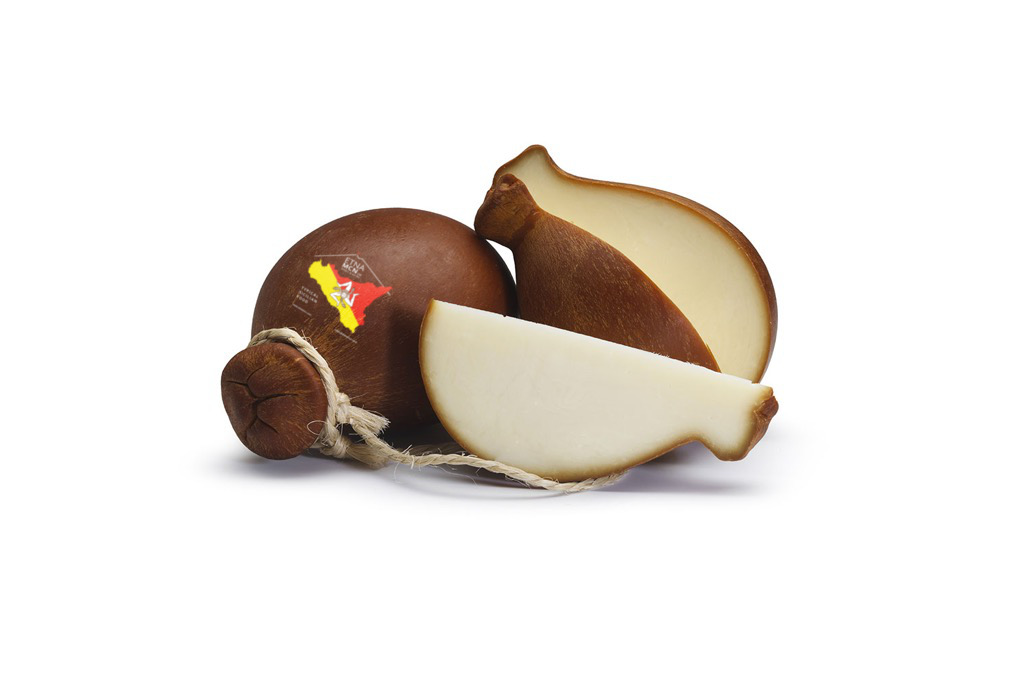
Smoked Provolone is a cheese made from cow’s milk, with a stringy texture. It acquires its round shape while hand working the curd. It is tied-off at the neck with raffia string or twine, and can have different sizes. It is also submerged in liquid smoke.
HOW TO SERVE
Smoked Provolone is a table cheese that can be paired with rustic appetizers.
Typology:Smoked stretched cheese. Ingredients: Milk, Rennet, Salt, Liquid fume. Milk provenance: East Sicily. Shape: Pear shape with calf’s head. Crust: Smooth and shiny crust. Colour: Uniform light brown. Inner colour and crust: Clear straw-coloured. Holes: Absent. Structure: Dense, moderately elastic. Smells: Smoked scents, lactic and vegetal notes. Flavours: Balance of mild, tart and sapid. Fragrances: Smoked and animal notes. Trigeminal sensation: Moderately warming. Structure inside mouth: Firstly lumpy then melting and soluble. Taste-olfactory persistence: Medium. Sales unit: About 0,5 Kg, 1 Kg, 2 Kg. Technological aspect: Raw milk, that originates in two milkings at most, is congealed with lamb’s rennet. The curd ripens in at least 24 hours, then stretched and shaped with traditional techniques that require only manual operations. The cheese ripens in natural environments. After a week, the cheese is immersed in liquid fume for about six hours. Quality control: H.A.C.C.P. System implemented in the whole productive process; product distribution with hazards control and sixmonth system control through internal and external second audit to main suppliers. Track: Track system applied for every production lot with acquisition of information and origin lots for raw materials, packaging products and execution’s charge in every degree of production cycle. Traceability: Capability for recall all deployment units at sale within 6 hours from non conformity manifestation. Non conform product’s withdrawal in 72 hours from sales freeze. Ripening: 4 days. Shelf life: 90 days. Preservation: Keep in fridge at positive temperature + 4° C. Packaging: Packaging 2012 Bach coding: 6 digits corresponding to start production’s day, month and year.
Among all the Sicilian dairy products, pecorino has the oldest traditions. The first historical references date back to the 9th century B.C., in one of the iconic passages from the Odyssey, when Ulysses met Polyphemus. The aging process of pecorino, is performed with the traditional dry method: the molds are rubbed periodically in alternate phases with coarse salt and topped-off with olive oil. At this point, the pecorino is ready for aging, which lasts between 4 to 6 months. The production process is very delicate and requires the experience and sensibility that only expert dairy farmers have.
HOW TO SERVE
Aged pecorino is an excellent table cheese, with a very pungent flavor. It can be paired with appetizers, fresh onions and fava beans. It is excellent also grated on pasta dishes, for those who like intense flavors. Typology:Smoked stretched cheese. Ingredients: Milk, Rennet, Salt, Liquid fume. Milk provenance: East Sicily. Shape: Pear shape with calf’s head. Crust: Smooth and shiny crust. Colour: Uniform light brown. Inner colour and crust: Clear straw-coloured. Holes: Absent. Structure: Dense, moderately elastic. Smells: Smoked scents, lactic and vegetal notes. Flavours: Balance of mild, tart and sapid. Fragrances: Smoked and animal notes. Trigeminal sensation: Moderately warming. Structure inside mouth: Firstly lumpy then melting and soluble. Taste-olfactory persistence: Medium. Sales unit: About 0,5 Kg, 1 Kg, 2 Kg. Technological aspect: Raw milk, that originates in two milkings at most, is congealed with lamb’s rennet. The curd ripens in at
least 24 hours, then stretched and shaped with traditional techniques that require only manual operations. The cheese ripens in natural environments. After a week, the cheese is immersed in liquid fume for about six hours. Quality control: H.A.C.C.P. System implemented in the whole productive process; product distribution with hazards control and sixmonth system control through internal and external second audit to main suppliers. Track: Track system applied for every production lot with acquisition of information and origin lots for raw materials, packaging products and execution’s charge in every degree of production cycle. Traceability: Capability for recall all deployment units at sale within 6 hours from non conformity manifestation. Non conform product’s withdrawal in 72 hours from sales freeze. Ripening: 4 days. Shelf life: 90 days. Preservation: Keep in fridge at positive temperature + 4° C. Packaging: Packaging 2012 Bach coding: 6 digits corresponding to start production’s day, month and year.
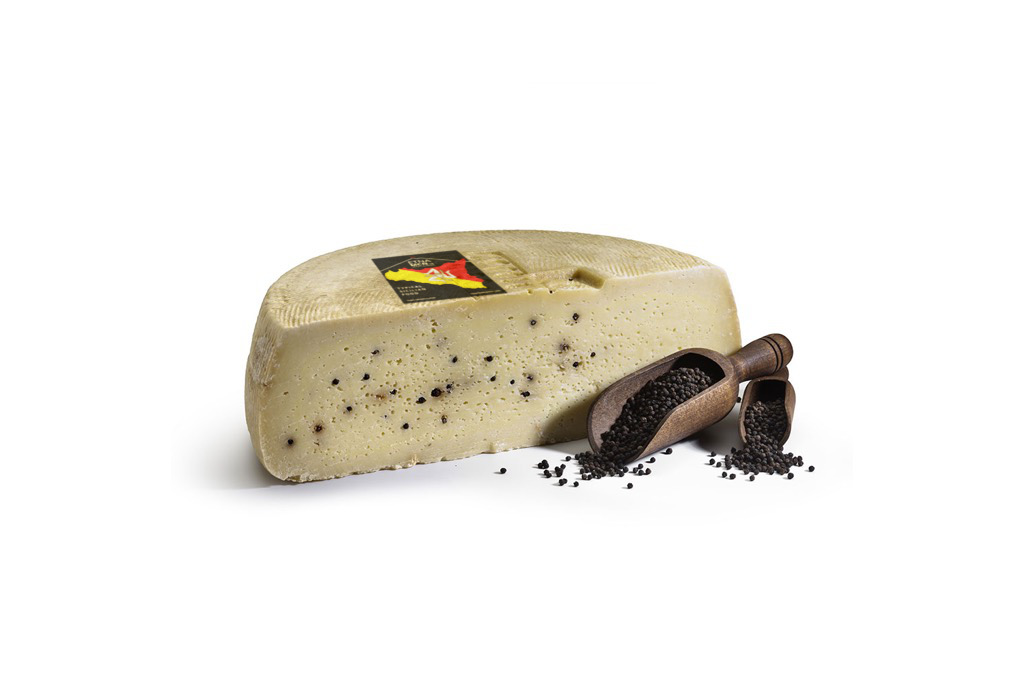
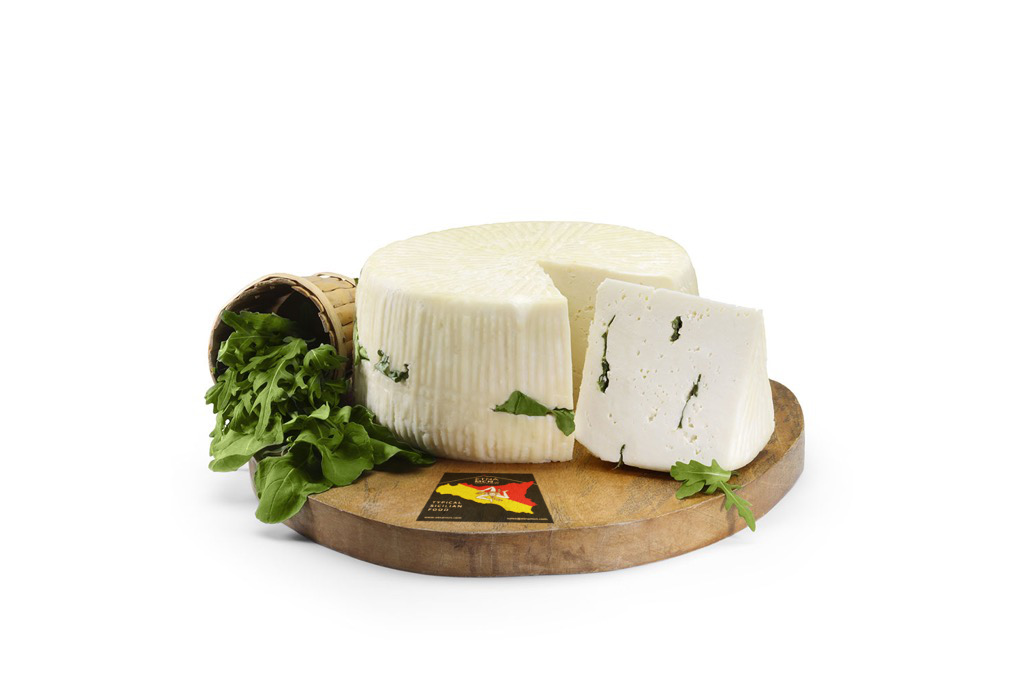
It’s a fresh cheese made from raw whole sheep milk. It has a spicy flavor and a persistent aroma, thanks to the minimum 30-day aging. The crust is soft and wrinkly, the texture is soft and compact, with minimal holes. It can be seasoned traditionally with black pepper, or with arugula, red pepper or pistachios, other typical Sicilian aromas.
HOW TO SERVE
A typical table cheese, served both at the beginning or at the end of the meal, and accompanied with refined local olives. Typology:Cheese from ovine milk with fresh rocket. Ingredients: Ovine milk, Rennet, Salt, rocket (2-3 %). Milk provenance: Area relating to Etna. Shape: Cylindrical and regular. Crust: Gets the basket’s marks. Colour: Not uniform straw-coloured and dark green coloured. Inner colour and crust: Not uniform straw-coloured and dark green coloured. Holes: Thin, uniform and small. Structure: Dense, moderately elastic. Smells: Balance of lactic, vegetal and animal notes. Flavours: Balance of mild, tart and sapid. Fragrances: Lactic, vegetal and mid animal. Trigeminal sensation: Moderately refreshing. Structure inside mouth: Firstly lumpy then melting and
soluble. Taste-olfactory persistence: Medium. Sales unit: About 3 Kg. Technological aspect: Raw ovine milk, that originates in two milkings at most, is congealed with lamb’s rennet. The curd is
discharged of whey in baskets and rummaged with traditional techniques that require only manual operations, in which fresh rocket is added. Stewing in whey and dry salting. The cheese becomes ripen in natural environments. Product requiring short maturing. Quality control: H.A.C.C.P. System implemented in the whole productive process; product distribution with hazards control and sixmonth system control through internal and external second audit to main suppliers. Track: Track system applied for every production lot with acquisition of information and origin lots for raw materials, packaging products and execution’s charge in every degree of production cycle. Traceability: Capability for recall all deployment units at sale within 6 hours from non conformity manifestation. Non conform product’s withdrawal in 72 hours from sales freeze. Ripening: 7 days. Shelf life: 60 days. Preservation: Keep in fridge at positive temperature + 4° C. Packaging: Vacuum-packed and heated foods bag. Bach coding: 6 digits corresponding to start production’s day, month and year.
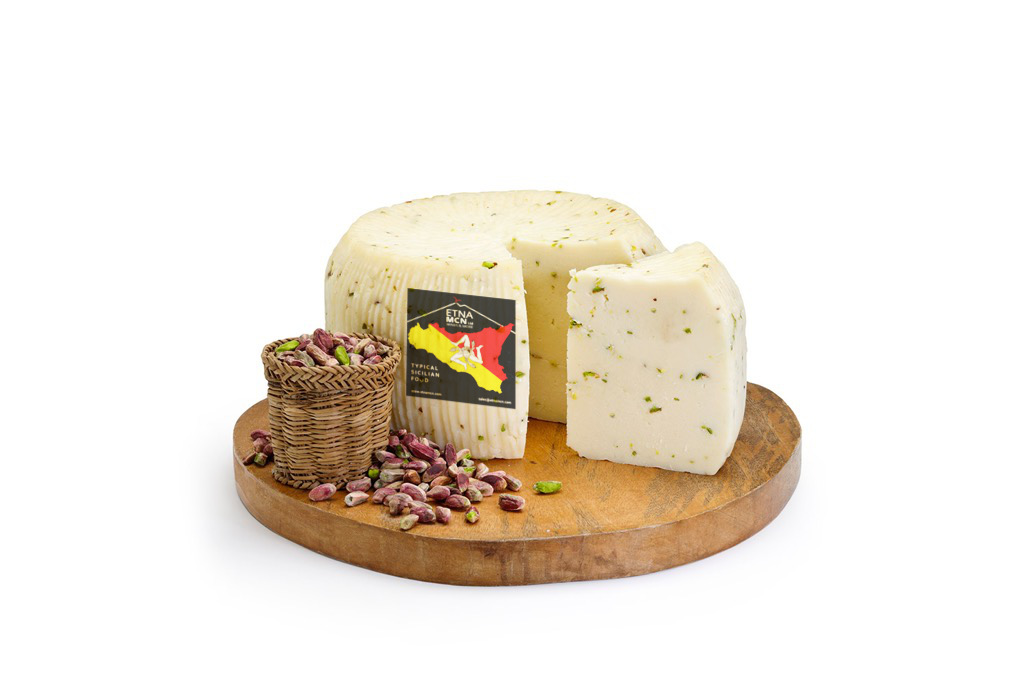
It’s a fresh cheese made from raw whole sheep milk. It has a spicy flavor and a persistent aroma, thanks to the minimum 30-day aging. The crust is soft and wrinkly, the texture is soft and compact, with minimal holes. It can be seasoned traditionally with black pepper, or with arugula, red pepper or pistachios, other typical Sicilian aromas.
How to serve: A typical table cheese, served both at the beginning or at the end of the meal, and accompanied with refined local olives.
Typology:Cheese from ovine milk with pistachio. Ingredients: Ovine milk, Rennet, Salt, Pistachio (2-3 %). Milk provenance: Area relating to Etna. Shape:Cylindrical and regular. Crust: Gets the basket’s marks. Colour: Not uniform straw-coloured with little green-yellow stains. Inner colour and crust:Not uniform straw-coloured with little green-yellow stains. Holes:Thin, uniform and small. Structure: Dense, moderately elastic. Smells: Balance of lactic, vegetal and animal notes. Flavours: Balance of Mild, tart and sapid. Fragrances:Lactic and mid animal. Trigeminal sensation: Moderately spicy. Structure inside mouth: Firstly lumpy then melting and soluble. Taste-olfactory persistence: Medium. Sales unit: About 3 Kg. Technological aspect: Raw ovine milk, that originates in two milkings at most, is congealed with lamb’s rennet. The curd is discharged of whey in baskets and rummaged with traditional techniques that require only manual operations, in which Sicilian pistachio is added. Stewing in whey and dry salting. The cheese becomes ripen in natural environments. Product requiring short maturing. Quality control: H.A.C.C.P. System implemented in the whole productive process; product distribution with hazards control and sixmonth system control through internal and external second audit to main suppliers. Track: Track system applied for every production lot with acquisition of information and origin lots for raw materials, packaging products and execution’s charge in every degree of production cycle. Traceability: Capability for recall all deployment units at sale within 6 hours from non conformity manifestation. Non conform product’s withdrawal in 72 hours from sales freeze. Ripening: 7 days. Shelf life: 90 days. Preservation: Keep in fridge at positive temperature + 4° C. Packaging: Vacuum-packed and heated foods bag. Bach coding: 6 digits corresponding to start production’s day, month and year.
It’s a fresh cheese made from raw whole sheep milk. It has a spicy flavor and a persistent aroma, thanks to the minimum 30-day aging. The crust is soft and wrinkly, the texture is soft and compact, with minimal holes. It can be seasoned traditionally with black pepper, or with arugula, red pepper or pistachios, other typical Sicilian aromas.
HOW TO SERVE
A typical table cheese, served both at the beginning or at the end of the meal, and accompanied with refined local olives.
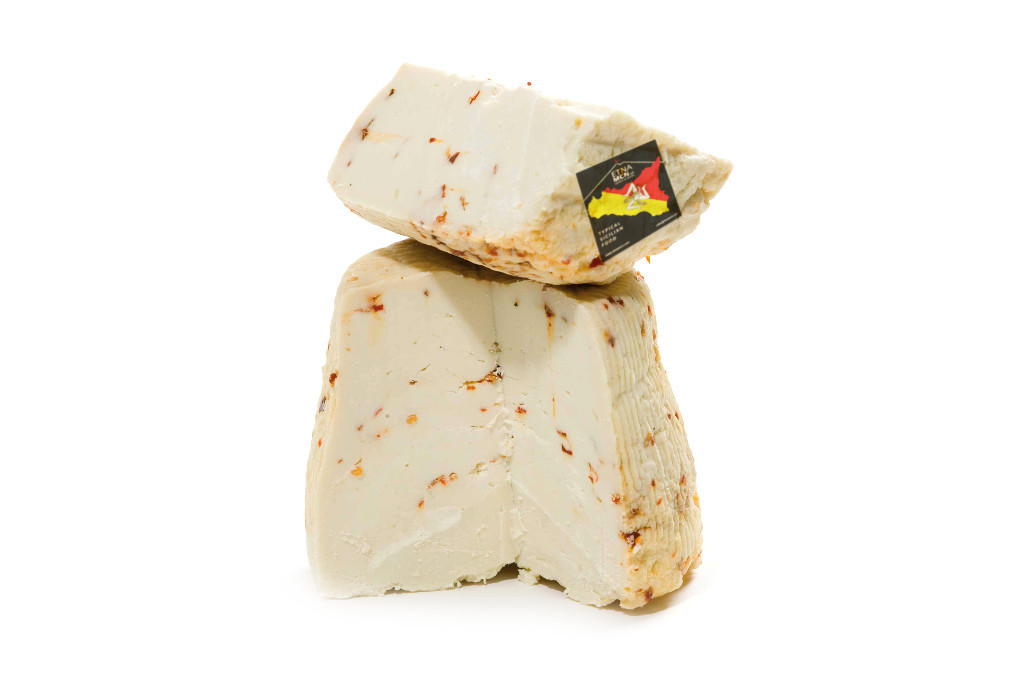
Typology: Cheese from ovine milk with chili pepper. Ingredients: Ovine milk, Rennet, Salt, chili pepper (2-3 %). Milk provenance: Area relating to Etna. Shape: Cylindrical and regular. Crust: Gets the basket’s marks. Colour: Not uniform straw-coloured and punctiform brick coloured. Inner colour and crust: Not uniform straw-coloured with punctiform brick coloured. Holes: Thin, uniform and small. Structure: Dense, moderately elastic. Smells: Balance of lactic, vegetal and animal notes, mid spicy. Flavours: Good notes of mild, tart and sapid. Fragrances: Lactic and mid animal. Trigeminal sensation: Spicy. Structure inside mouth: Firstly lumpy then melting and soluble. Taste-olfactory persistence: High. Sales unit: About 3 Kg. Technological aspect: Raw ovine milk, that originates in two milkings at most, is congealed with lamb’s rennet. The curd is
discharged of whey in baskets and rummaged with traditional techniques that require only manual operations, in which chili pepper is added. Stewing in whey and dry salting. The cheese becomes ripen in natural environments. Product requiring short maturing. Quality control: H.A.C.C.P. System implemented in the whole productive process; product distribution with hazards control and sixmonth system control through internal and external second audit to main suppliers. Track: Track system applied for every production lot with acquisition of information and origin lots for raw materials, packaging products and execution’s charge in every degree of production cycle. Traceability: Capability for recall all deployment units at sale within 6 hours from non conformity manifestation. Non conform product’s withdrawal in 72 hours from sales freeze. Ripening: 7 days. Shelf life: 120 days. Preservation: Keep in fridge at positive temperature + 4° C. Packaging: Vacuum-packed and heated foods bag. Bach coding: 6 digits corresponding to start production’s day, month and year.
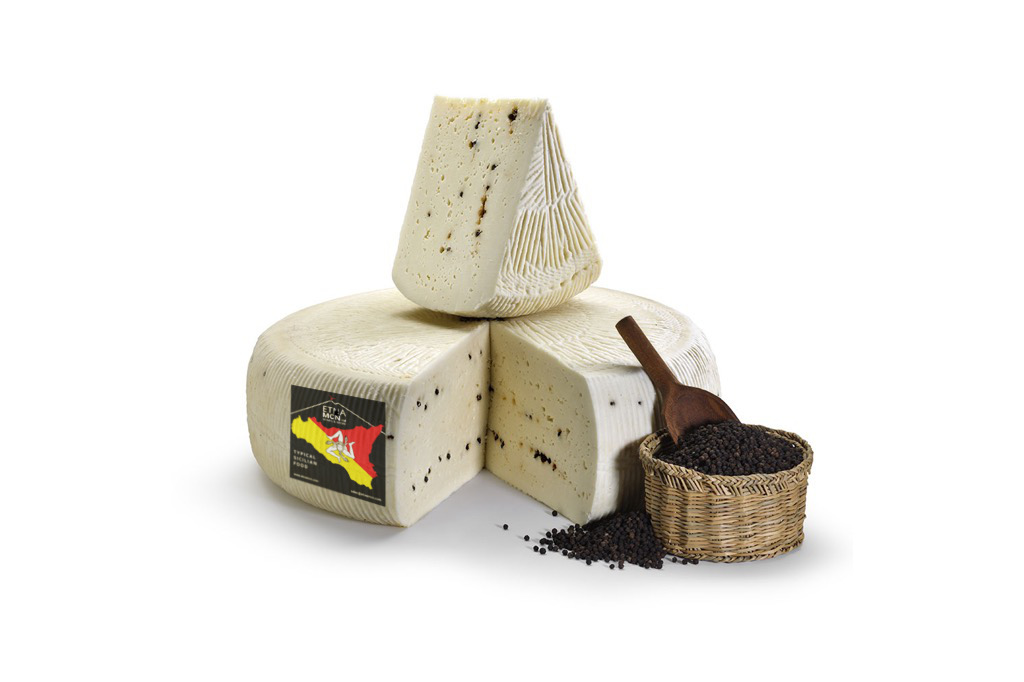
It’s a fresh cheese made from raw whole sheep milk. It has a spicy flavor and a persistent aroma, thanks to the minimum 30-day aging. The crust is soft and wrinkly, the texture is soft and compact, with minimal holes. It can be seasoned traditionally with black pepper, or with arugula, red pepper or pistachios, other typical Sicilian aromas.
How to serve: A typical table cheese, served both at the beginning or at the end of the meal, and accompanied with refined local olives.
Typology:Fresh cheese from ovine milk. Ingredients:Ovine milk, Rennet, Salt. Milk provenance: Area relating to Etna. Shape:Cylindrical and regular. Crust: Gets the basket’s marks. Colour: Straw-coloured. Inner colour and crust:Clear straw-coloured. Holes:Thin, uniform and small. Structure: Dense, moderately elastic. Smells: Balance of lactic, vegetal and animal notes. Flavours: Balance of Mild, tart and sapid. Fragrances:Lactic and mid animal. Trigeminal sensation: Moderately spicy. Structure inside mouth: Firstly lumpy then melting and soluble. Taste-olfactory persistence: Medium. Sales unit: About 1 Kg, 3 Kg, 5 Kg, 10 Kg, 15 Kg, 20 Kg. Technological aspect: Raw ovine milk, that originates in two milkings at most, is congealed with lamb’s rennet. The curd is discharged of whey in baskets and rummaged with traditional techniques that require only manual operations. Stewing in whey and dry salting. The cheese becomes ripen in natural environments. Product requiring short maturing. Quality control: H.A.C.C.P. System implemented in the whole productive process; product distribution with hazards control and sixmonth system control through internal and external second audit to main suppliers. Track: Track system applied for every production lot with acquisition of information and origin lots for raw materials, packaging products and execution’s charge in every degree of production cycle. Traceability: Capability for recall all deployment units at sale within 6 hours from non conformity manifestation. Non conform product’s withdrawal in 72 hours from sales freeze. Ripening: 7 days. Shelf life: 120 days. Preservation: Keep in fridge at positive temperature + 4° C. Packaging: Vacuum-packed and heated foods bag. Bach coding: 6 digits corresponding to start production’s day, month and year.
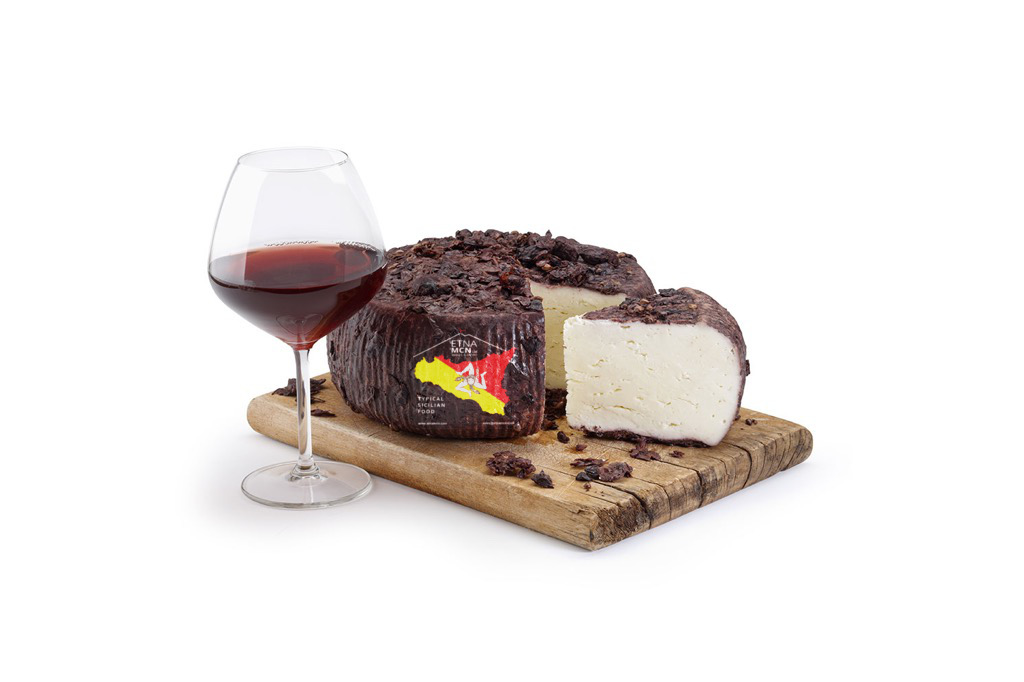
It’s a cheese made from whole cow’s milk. After about 15 days from production, the molds are submerged in the musts of black grapes (from Etna), where they rest from 40 to 60 days. It’s usually produced in September and October, when the wines are fermenting. It has a white texture and is compact, minimal holes, and could have a white to straw color, with an aroma of milk and wine. The typical full aromatic flavor is sweet and spicy at the same time, blended to a hint of wine.
HOW TO SERVE
It’s a table cheese that can be enjoyed alone, or at the end of a meal as a dessert. Typology:Cheese from ovine milk flavoured with Red Etna’s vinasses. Ingredients: Milk, Rennet, Salt, processed in surface with
vinasses. Milk provenance: East Sicily. Shape: Cylindrical. Crust: Crust marked by not uniform vinasses. Colour: Not uniform with dark stains and clear strawcoloured
areas. Inner colour and crust: Clear straw-coloured. Holes: Thin, uniform and small. Structure: Dense. Smells: Lactic, vegetal and animal notes. Flavours: Balance of mild, tart and moderately sapid. Fragrances: Vegetal and fermented fruit scents. Trigeminal sensation: Moderately warming. Structure inside mouth: Firstly crumblt then soluble. Taste-olfactory persistence: High. Sales unit: 3 Kg. Technological aspect: After 15 days from production, the whole is immersed in boxes containing fresh vinasses of Red Etna
grapes, only just drawn off wine, where they remain from 40 to 60 days. It is produced in September-October, when grapes must ferments in wine cellars. Quality control: H.A.C.C.P. System implemented in the whole productive process; product distribution with hazards control and sixmonth system control through internal and external second audit to main suppliers. Track: Track system applied for every production lot with acquisition of information and origin lots for raw materials, packaging products and execution’s charge in every degree of production cycle. Traceability: Capability for recall all deployment units at sale within 6 hours from non conformity manifestation. Non conform product’s withdrawal in 72 hours from sales freeze. Ripening: 60 days. Shelf life: 180 days. Preservation: Keep in fridge at positive temperature + 4° C. Packaging: Vacuum-packed and heated foods bag. Bach coding: 6 digits corresponding to start production’s day, month and year.
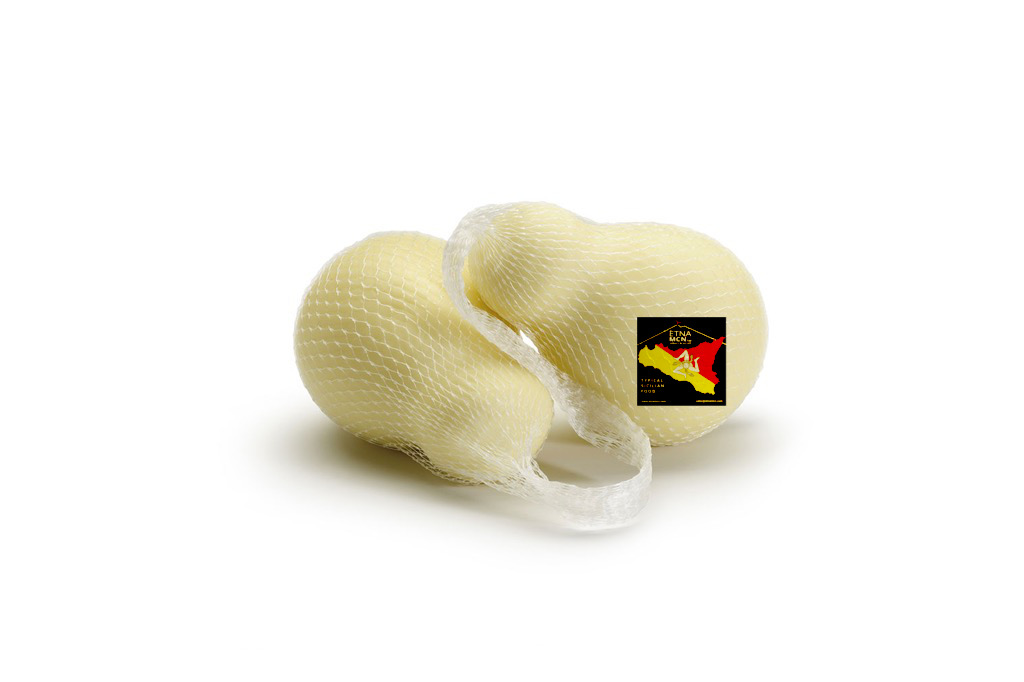
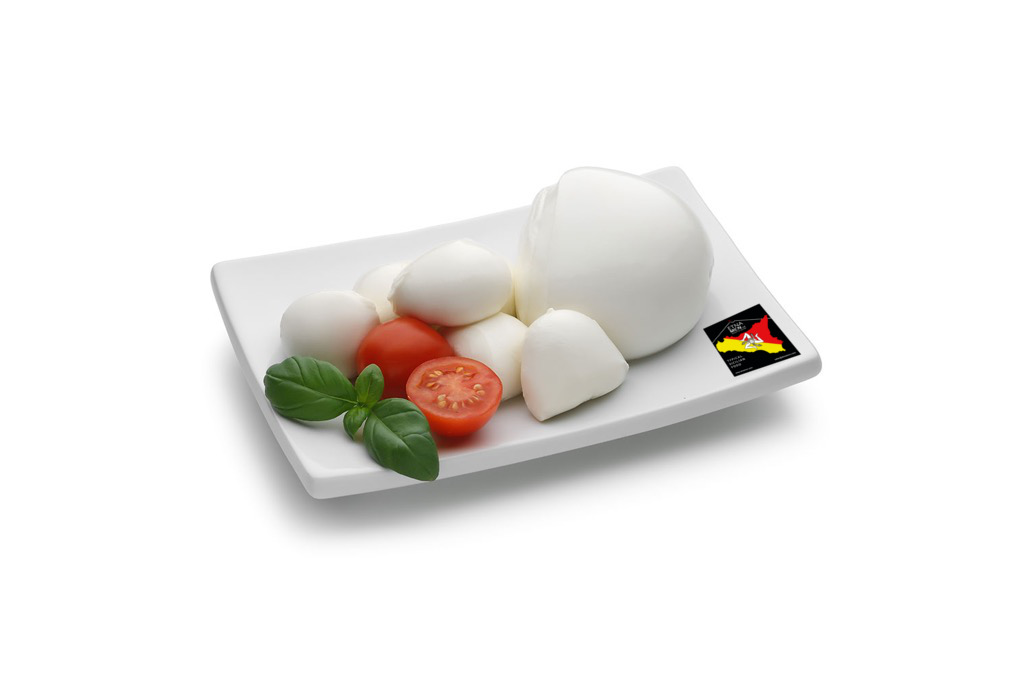
Mozzarella is cheese made from cow’s milk, with a stringy texture and hand-spun.
How to serve: Mozzarella is a table cheese that can be paired with rustic appetizers. It can be used as a topping for pizza or salads, such as the Caprese. It can also be served breaded and fried. Typology:Stretched cheese from cow milk. Ingredients:Milk, Rennet, Salt. Milk provenance: East Sicily. Shape:Round irregular. Crust: Smooth and shiny crust. Colour: Pearly white. Inner colour and crust:Milk-white. Holes:Absent. Structure: Soft, moderately elastic. Smells: Lactic and vegetal notes. Flavours: Balance of mild, tart and moderately sapid. Fragrances: Lactic with light animal notes. Trigeminal sensation: Absent. Structure inside mouth: Elastic, moist, good
succulence. Taste-olfactory persistence: Low. Sales unit: About 0,5 Kg. Technological aspect: After milk’s coagulation, the curd is grossly broken, then it ripens. When it becomes ripe, it is cut in strips and kneaded with wood sticks at high temperature until it attains the convenient consistency. Some morsels of curd are stumped (“mozzati”). Quality control: H.A.C.C.P. System implemented in the whole productive process; product distribution with hazards control and sixmonth system control through internal and external second audit to main suppliers. Track: Track system applied for every production lot with acquisition of information and origin lots for raw materials, packaging products and execution’s charge in every degree of production cycle. Traceability: Capability for recall all deployment units at sale within 6 hours from non conformity manifestation. Non conform product’s withdrawal in 72 hours from sales freeze. Ripening: Absent. Shelf life: 7 days. Preservation: Keep in fridge at positive temperature + 4° C. Packaging: Heated tub and maintenance liquid. Bach coding: 6 digits corresponding to start production’s day, month and year.
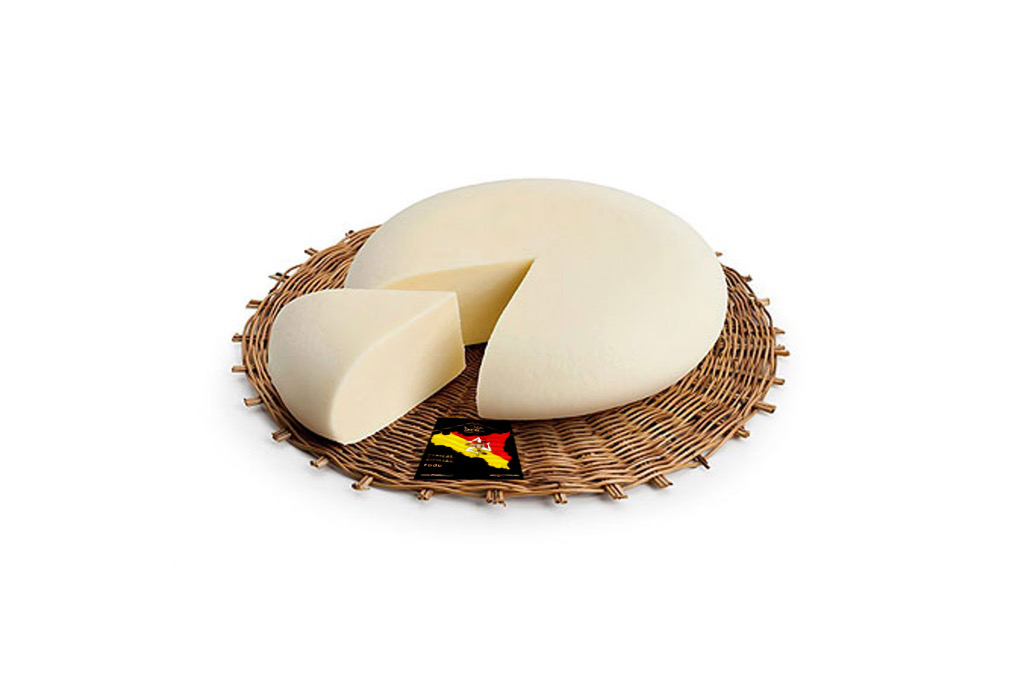
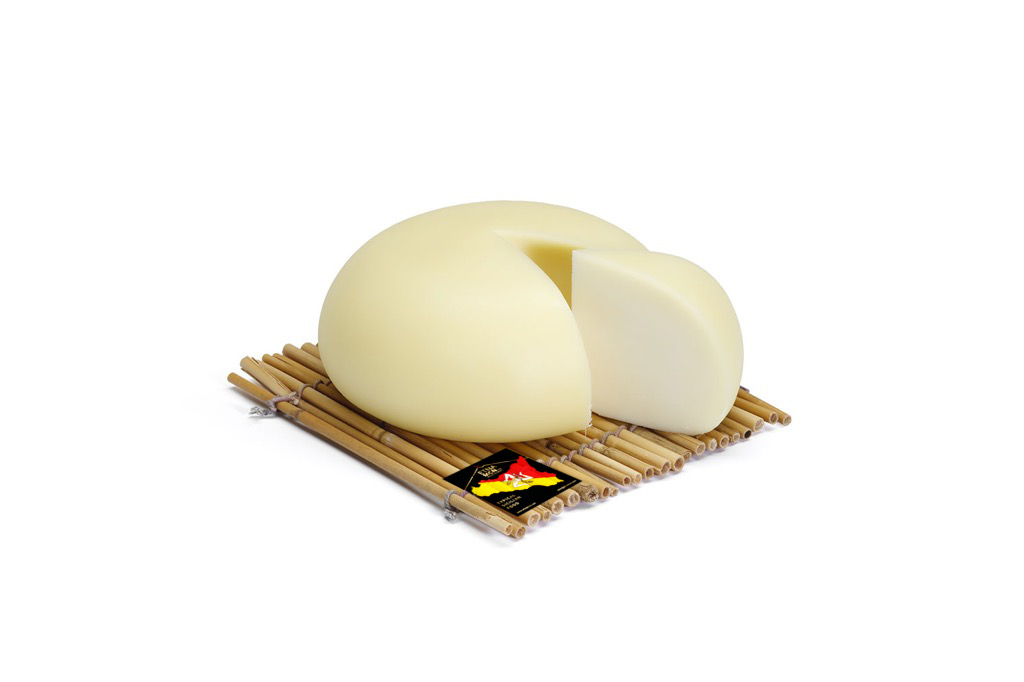
Caciotta is a cheese made from cow’s milk, with a stringy texture and straw-colored.
How to serve: Caciotta is a table cheese that can be paired with rustic appetizers. It can also be used as filling for stuffed tomatoes and eggplant rolls. Typology:Stretched cheese. Ingredients:Milk, Rennet, Salt. Milk provenance: East Sicily. Shape:Round and flattened. Crust: Smooth and shiny crust. Colour: Straw-coloured. Inner colour and crust:Clear straw-coloured. Holes:Absent. Structure: Dense, moderately elastic. Smells: Melted butter lactic scents and vegetal notes. Flavours: Balance of mild, tart and sapid. Fragrances: Lactic and animal notes. Trigeminal sensation: Moderately spicy. Structure inside mouth: Firstly lumpy then melting and soluble. Taste-olfactory persistence: Low. Sales unit: About 0,5 Kg, 1 Kg, 2 Kg. Technological aspect: Raw milk, that originates in two milkings at most, is congealed with lamb’s rennet. The curd ripens in at least 24 hours, then stretched and shaped with traditional techniques that require only manual operations. The cheese ripens in natural environments. Quality control: H.A.C.C.P. System implemented in the whole productive process; product distribution with hazards control and sixmonth system control through internal and external second audit to main suppliers. Track: Track system applied for every production lot with acquisition of information and origin lots for raw materials, packaging products and execution’s charge in every degree of production cycle. Traceability: Capability for recall all deployment units at sale within 6 hours from non conformity manifestation. Non conform product’s withdrawal in 72 hours from sales freeze. Ripening: 1 day. Shelf life: 90 days. Preservation: Keep in fridge at positive temperature + 4° C. Packaging: Vacuum-packed and heated foods bag. Bach coding: 6 digits corresponding to start production’s day, month and year.











 English
 Italian